SF Symphony trombonist Timothy Higgins enjoys transition from performer to composer
Higgins-headshot1.jpg

Q&A

with Timothy Higgins

1) What was the inspiration for Sinfonietta?  

I came up with the idea to write this piece as a challenge to myself.  Since the majority of my musical career is performing in an orchestra playing symphonies, I thought it would be a good exercise to try to write something in a symphonic form.  I chose to write for brass and percussion because that is what I am most familiar with, being a trombonist myself!  I drew inspiration from composers like Shostakovich and Bruce Broughton to come up with the harmonic and formal material of the Sinfonietta. 

2) Has this piece been publicly performed before?  

The piece has been performed twice: by the San Francisco Conservatory of Music brass ensemble and the Chicago Symphony Brass section.

3) What inspired you to become a composer after becoming a professional trombonist?  

Music performance is a very specific side of the orchestral world.  Arguably, it is the midpoint between the composer and the audience.  What the composer feels and how the audience feels listening to the composer are all that matter in the end.  Performers are just skilled translators. I chose to explore composition in order to experience another side of the music process. In doing so, it informs my views of music performance.

4) How does it feel to have your SFS colleague—Symphony Parnassus Maestro Stephen Paulson, also principal bassoon for SFS—conducting your work?  

It's a thrill to have such support from Steve Paulson.  We have a very strong community in the SFS, and I am very touched that Steve would give me the opportunity to have my music heard on his program.  

Composer Profile: Timothy Higgins

Composer Timothy Higgins’ piece, Sinfonietta, for brass ensemble and percussion, will open the March 18 concert with Symphony Parnassus. Higgins, principal trombone with the San Francisco Symphony, in the Robert L. Samter Chair since 2008, is a Houston, Texas, native who began composing several years ago for players in the orchestra and other musician friends. His compositions and arrangements have been heard in San Francisco Symphony chamber and holiday concerts.

“I feel like my job as a composer is to create something that will hopefully have its own life afterwards,” Timothy said. “I compare it to parenting: I’m ‘raising’ this piece, then at a certain point you cut the cord and let it go, and hope that it has everything it needs to survive.” 

Prior to his post in San Francisco, Timothy was the acting second trombonist with the National Symphony Orchestra in Washington, D.C.  He has a bachelor’s degree in music performance from Northwestern University and has performed with the Milwaukee Symphony, Virginia Symphony, Chicago Symphony, Civic Orchestra of Chicago, Music of the Baroque, Grand Teton Music Festival, Sun Valley Summer Symphony, Washington National Opera, and Baltimore Symphony. 

In addition to his busy performing career, Timothy is a sought-after arranger of music. He was the sole arranger of the National Brass Ensemble’s Gabrieli recording. Additionally, he has arranged music for CT3 Trombone Quartet, National Brass Quintet, Bay Brass, and the San Francisco Conservatory of Music Brass Ensemble. He has also composed works for brass instruments in solo and chamber settings.

His arrangements and compositions have been performed by the Washington Symphonic Brass, the Bay Brass, the San Francisco Symphony brass section, the Chicago Symphony brass section, the Los Angeles Philharmonic brass section, and numerous university brass ensembles . His arrangements and original compositions are available through his publishing company, 415Music.

As a teacher, Timothy been a faculty member of the Pokorny Seminar since 2012, and is currently on faculty at the San Francisco Conservatory of Music and at Northwestern University. He has also led masterclasses in Japan, China, Canada and the United States, including classes at the Royal Conservatory in Toronto, the New World Symphony, and the Juilliard School of Music.

In 2005, Timothy won the Robert Marstellar Solo Trombone Competition, as well as the ITA Trombone Quartet competition with CT3.  While attending the Tanglewood Music Center, Timothy was awarded the Grace B. Upton Award for Outstanding Fellow. In 2013, Timothy released his solo CD, Stage Left which is available from his website: www.415-music.com

Sister soloists Starla and Valery Breshears perform Haydn, Mozart on Jan. 28 with Symphony Parnassus

Symphony Parnassus serves up a rare opportunity at our Jan. 28 concert: The chance to hear two young sisters perform separate concertos with the orchestra.

Sarah Smith, president of the Symphony Parnassus Board of Directors, said, that to her knowledge, this is the first time in the history of the orchestra that two siblings will have shared the spotlight as soloists in the same concert.

“These two young girls play at a level so far beyond their years,” she said. “Those of us in the orchestra were shocked when we heard them for the first time.”

The sisters are winners of the 2017 Symphony Parnassus / San Francisco Conservatory of Music Competition, an annual event that showcases some of the brightest upcoming talent in classical music, and have won numerous other prizes.     

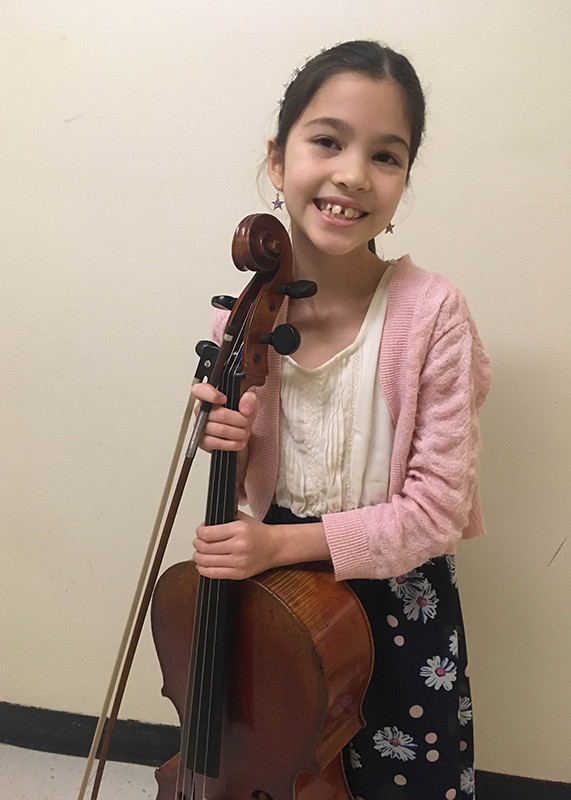
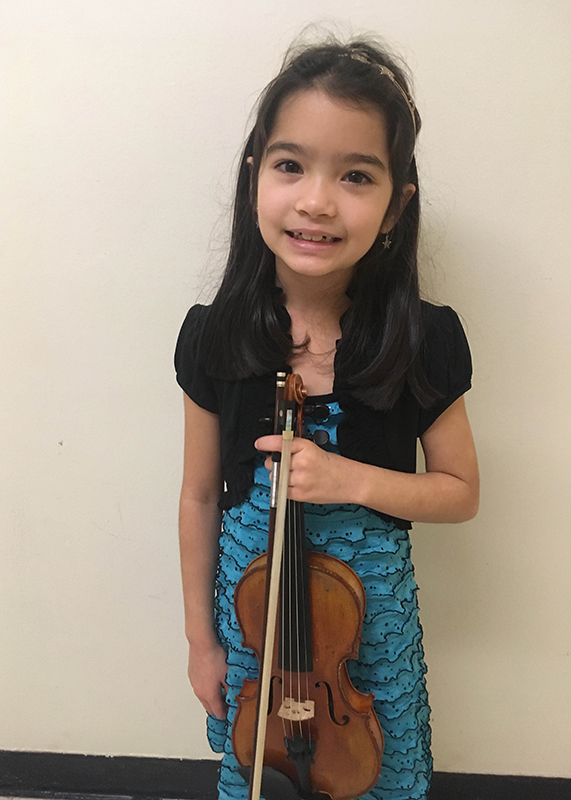
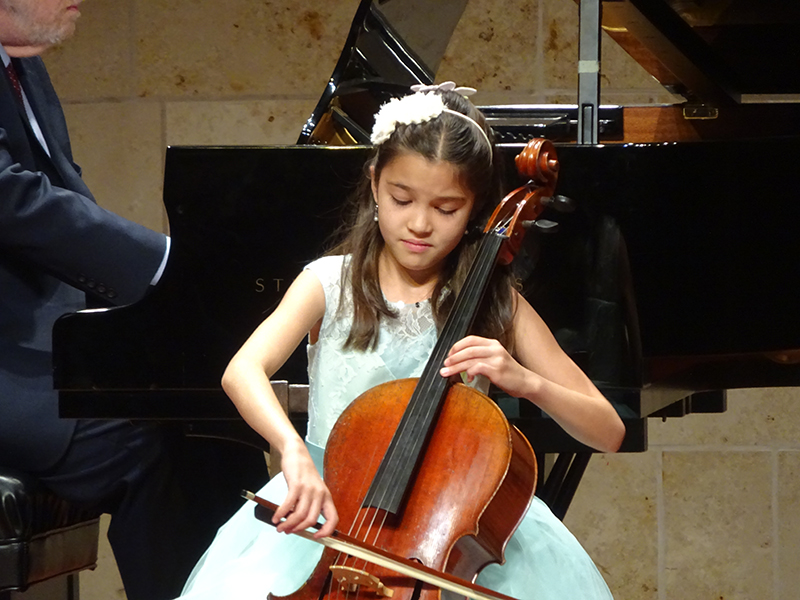
Starla Breshears, 10, will perform Haydn’s Cello Concerto No. 1 in C Major; and Valery Breshears, 8, will perform Mozart’s Violin Concerto No. 3 in G Major.

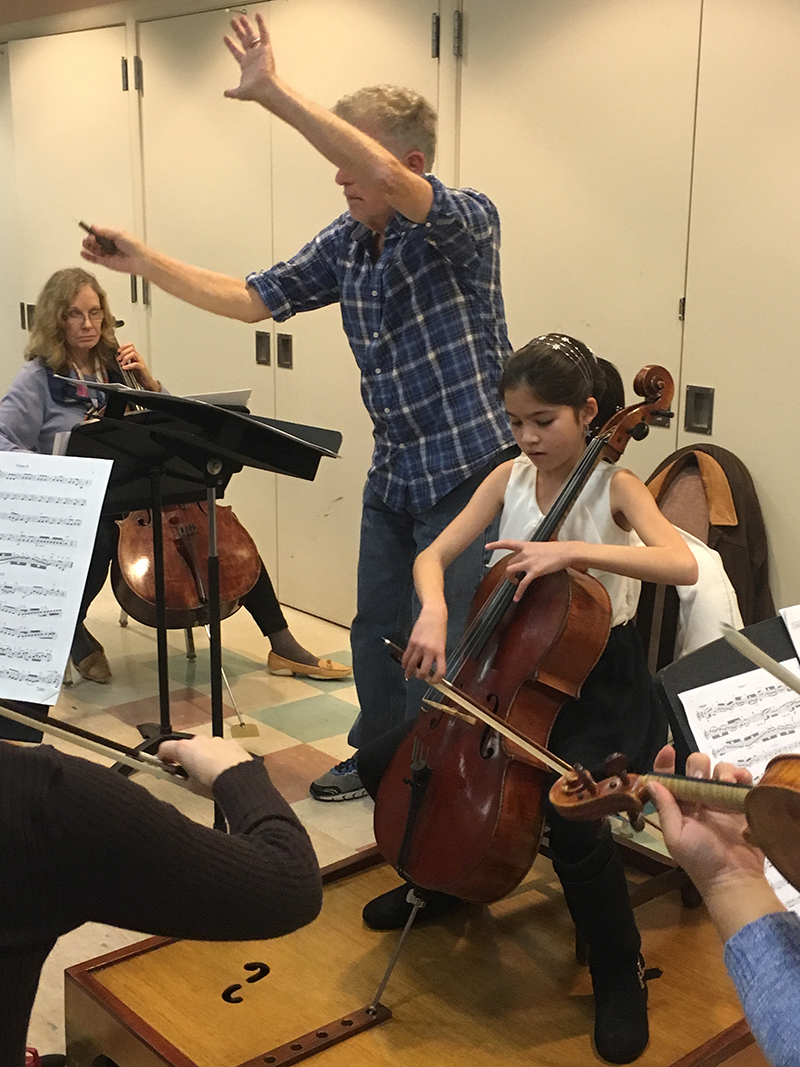
Starla, who studies with renowned cellist Christine Walevska, says that her performance with Parnassus will be her second time playing the entire Haydn concerto with an orchestra; she has performed separate movements with other orchestras (including one at the Bear Valley Music Festival, and with the Holy Names University Orchestra). She says she was drawn to the “deep tone” of the cello when she started playing at age 3.    

Valery is excited to perform the entire Mozart concerto with an orchestra for the first time. She has performed the first movement with two other orchestras (Fremont Symphony and Paradise Symphony Orchestra), but not the entire piece. She has been playing violin since age 2 and currently studies with William Barbini at the San Francisco Conservatory of Music.

The sisters also perform with older brother Dustin Jr., 11, a violinist, as the Little Stars Trio, which has toured internationally to festivals and events in Mexico, Argentina and England. This past year in Los Angeles, they performed on “Little Big Shots,” (NBC, Sundays, 8 p.m.) a TV variety show hosted by Steve Harvey that showcases youth performers ranging from musical virtuosos to martial arts experts. The show taped in October and will air in Season 3 sometime this March. They also traveled in November to London to tape an appearance in the British version of the program that will air in the spring in Great Britain. Both versions of the show boast audiences of 8 million viewers in their respective countries.

The Little Stars Trio can often be found performing “Eine Kleine Nachtmusik,” “Simple Gifts,” and other favorites (some pieces they arrange themselves, with the help of their parents) for tourists near Powell and Market streets in downtown San Francisco on most Saturdays after lessons and rehearsals at the S.F. Conservatory of Music, where all three participate in the Pre-College Program for up-and-coming classical musicians.

“I like busking,” Starla said, “because you can see people’s faces and how excited they are.”

Valery, too, likes playing for people walking by. “It’s one of my favorite things to do,” she says. “It’s not like practicing, but it kind of is...It’s fun to play the pieces when you don’t have to worry if you mess up.”

The Breshears sisters live with their parents Dustin and Julie—both pianists and teachers—and four other siblings in Chico, California. Two of the three youngest, Colin, 5, and Delilah, almost 3, are already taking lessons on the violin and cello, respectively. Serenity, at 1-year-old is the youngest Breshears, will take up the violin, according to Dustin Sr.

“We're planning for Serenity to eventually inherit our 1/64 size violin that Valery and Colin started with,” he said. “Eventually, as some of the violins learn viola, we will have the right instrumentation for duos, trios, quartets, quintets, and sextets!”

It’s safe to say we can expect to hear more and more music from the talented Breshears family.

Composer Preben Antonsen premieres uplifting, orchestral hymn 'What Wondrous Love'
Preben Antonsen, composer

Preben Antonsen, composer

Composer Preben Antonsen, whose new piece “What Wondrous Love,” makes its world premiere at Symphony Parnassus’ Nov. 19 concert, graduated from Yale University in 2013, majoring in music and computer science. He has been composing since he was a small child. “Before I knew how to read music, I would make drawings on staff paper,” he said. “At 4 years old, some kids draw pictures. I would draw pictures made out of notes.”

Though he’s only 26, he has an impressive list of accomplishments:

  • Studied with composer John Adams from 2001-2009
  • San Francisco Symphony Youth Orchestra premiered his first orchestral work in March 2009
  • In 2008, he appeared in NPR’s program about young classical musicians, “From the Top”
  • American Society of Composers, Authors and Publishers (ASCAP) recognized him with six Morton Gould Young Composer Awards: 2001, 2002, 2005, 2006, 2009 and 2010

Below are a few questions and answers with Preben (pronounced PRAY-ben):

Where are you from and where do you live now?

I was born in Seattle but since age 4, I have lived in Berkeley.  

What is your musical background / family?

I learned to read music when I had piano lessons starting at age 6. I started trying to compose even then—mostly writing down melodies my sister would play on the violin. Both of my parents are amateur musicians: My dad plays trumpet (and has played with Parnassus before), and my mom studied piano as a kid, likes to sing, and is a music lover. My sister plays the violin.

What is your life like as a working composer?

My time split between a few things. I work at a Catholic Church (St. Jerome’s in El Cerrito), and I teach piano / composition students, some of them through the John Adams Young Composer Program at the Crowden School in Berkeley. I compose as much as possible and also perform as a pianist—one concert a year for the past five years. I also write with (composer / conductor) Matthew Cmiel for the new music ensemble, After Everything. I am writing a piece for eight double-basses for a concert later in the year.

What was the inspiration for “What Wondrous Love”?

The main idea was the old Christian hymn. Samuel Barber wrote a set of variations on it, and it’s from that shape-note style of singing, unaccompanied vocal harmony. I always liked that song as a kid, and working in a church reminded me of it. I thought it would be great to do an orchestral version. That’s the arrival point.

I wanted to see about writing a piece that ended happily without feeling sentimental or shallow. It starts in a minor key with a lot of darkness, and then there is some climbing upwards, and there’s an uplifting result at the end of the short but perilous journey.

How is it to work with Symphony Parnassus?  

It’s great. It’s a rare opportunity, and I will definitely try to make the most of it and learn as much about orchestration as I can. It’s thrilling to hear something of mine played by the orchestra for the first time. It’s hard to imagine how it will really sound (played by the specified instruments). I have a clear aural image, but the way each instrument moves through the notes is really distinctive. I have to imagine that aspect of it when I am composing on the piano.