Pierce Wang enjoys lively Conus concerto, dedicates performance to his late grandmother
Pierce Wang, violin

Pierce Wang, violin

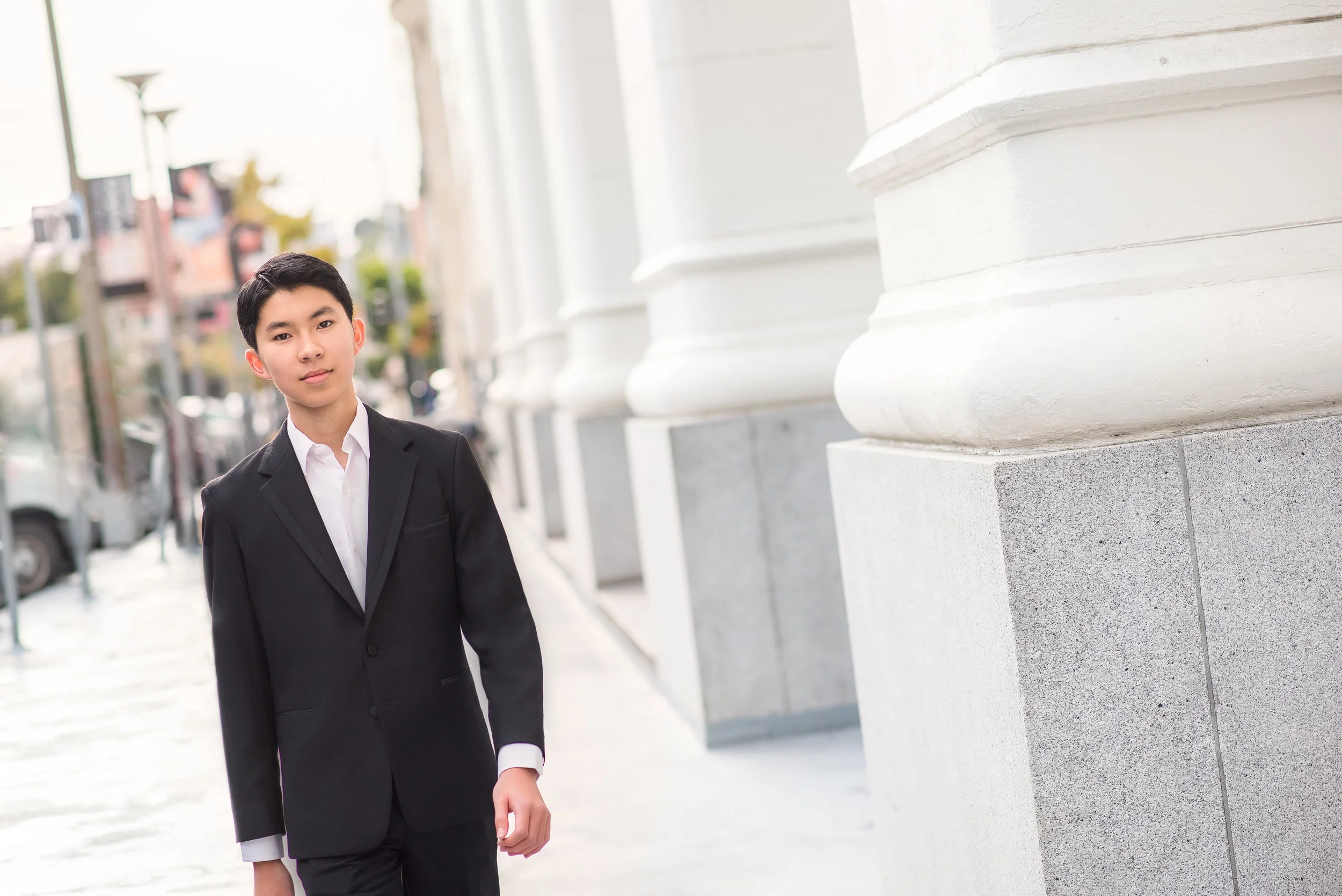
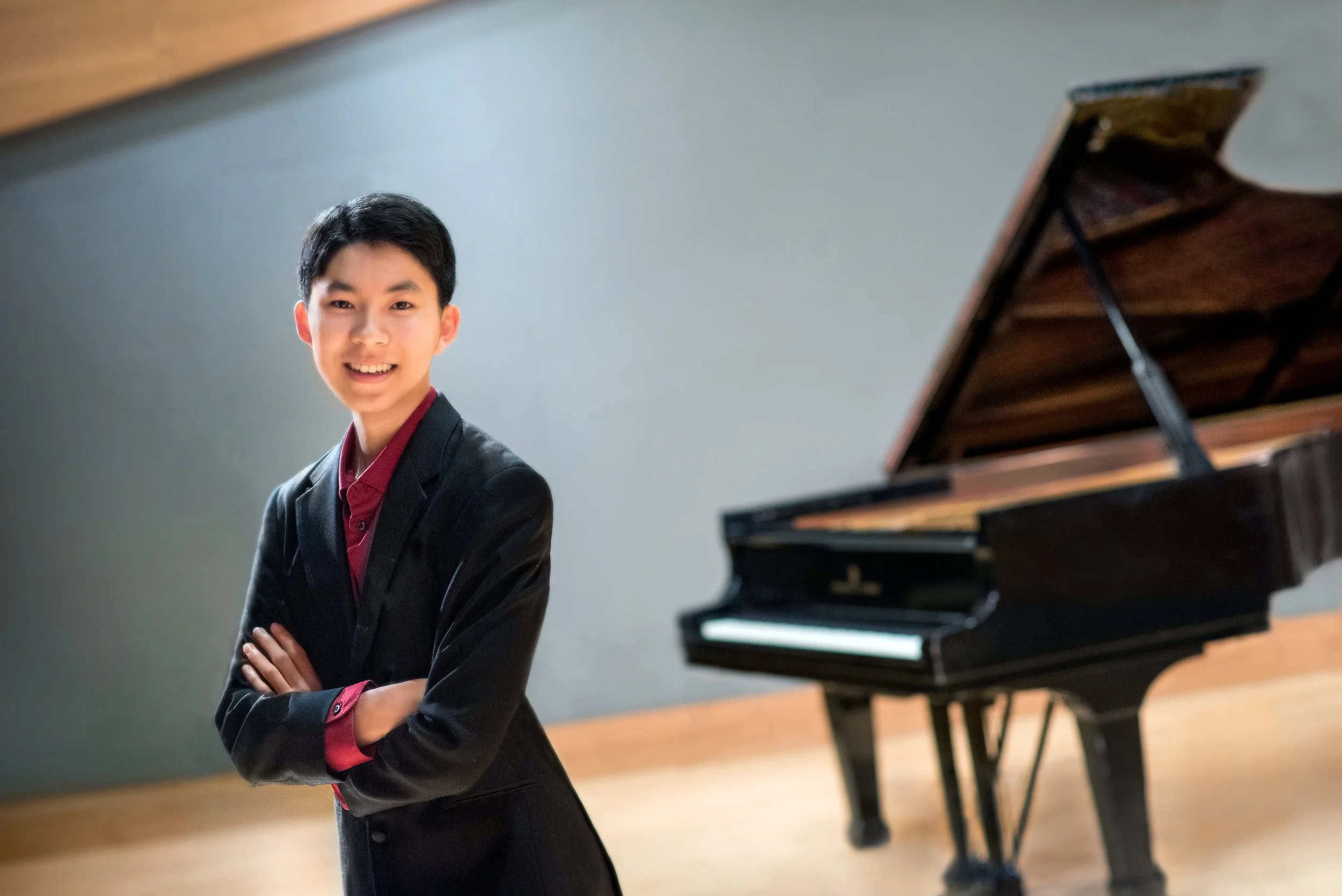
When asked about his favorite music, violinist Pierce Wang, 14, answers simply, “Conus, as it is my main piece now,” he said.

It sure is. “Conus,” Pierce’s nickname for the dramatic but seldom-played Violin Concerto in E Minor by Russian Romantic composer Julius Conus, has gotten a lot of attention from the young violinist this year. He has performed it with two other regional orchestras—the Saratoga Symphony and the Solano Symphony—and on Nov. 19, he performs it with Symphony Parnassus at Taube Atrium Theater in San Francisco.

“I feel very honored and excited to play with Symphony Parnassus,” Pierce said. “My hope is that everyone will walk away from the performance with some amount of awe after hearing the Conus.”

Pierce’s upcoming performance will have a special dedication: He is playing to honor his maternal grandmother, Ellen Yeh, who died in mid-October. She liked to watch him practice and always supported him. “My grandmother often reminded my parents how important it was that I enjoyed the violin as I continued learning to play,” he said. “She loved to hear me play my violin as much as seeing my card-throwing and amateur magic tricks.”
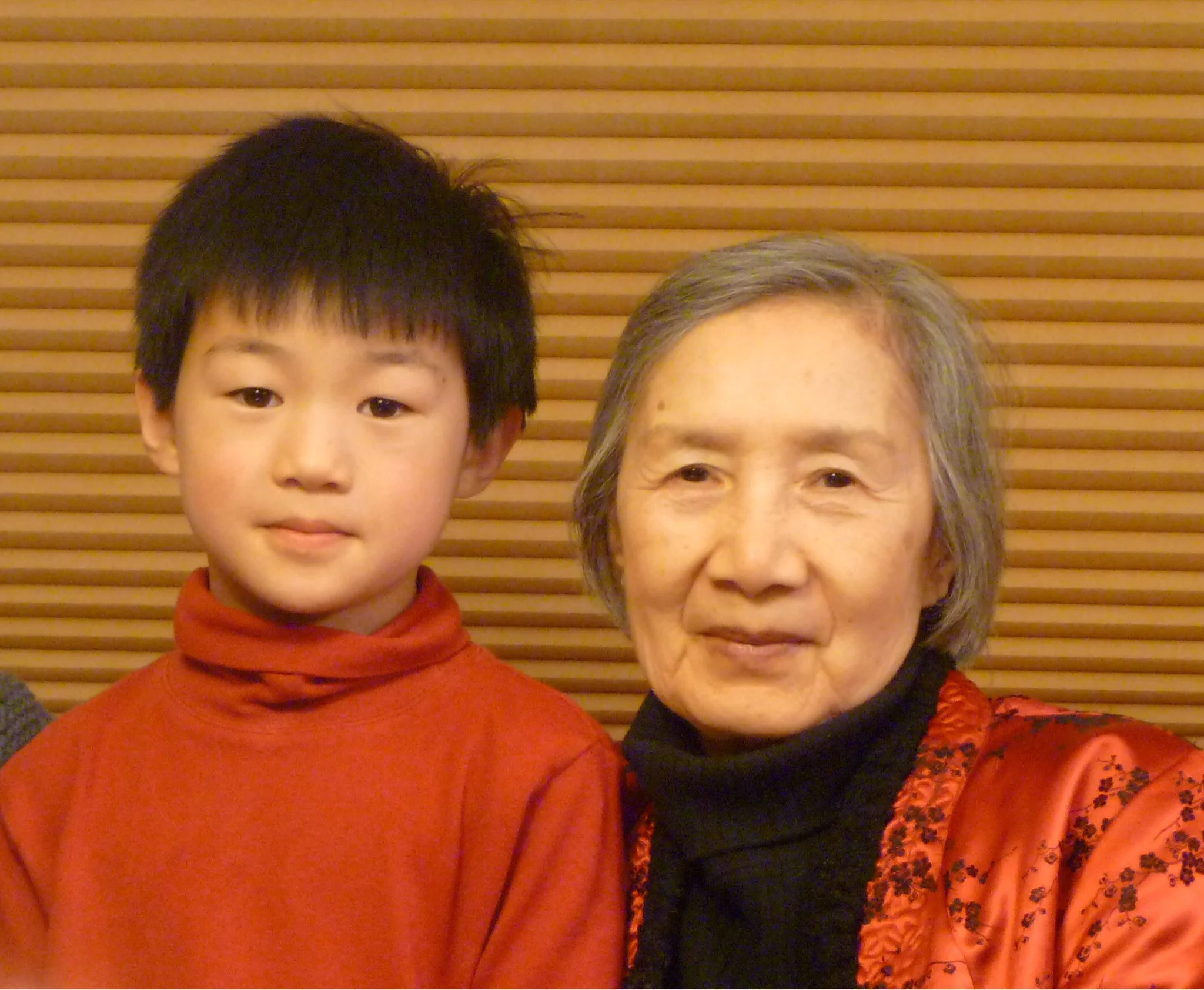
Pierce said this picture—of him as a young child, with his late grandmother, Ellen Yeh—is one of his favorites. His performance is a dedication to her memory.

Pierce said this picture—of him as a young child, with his late grandmother, Ellen Yeh—is one of his favorites. His performance is a dedication to her memory.

Pierce has been studying violin almost his whole life—12 years. In addition to the beauty of the instrument, he also likes the violin for practical reasons: “I am a very active person,” he said. “I bring it with me everywhere.”

He is a winner of the 2017 San Francisco Conservatory of Music – Symphony Parnassus Concerto Competition, and has achieved many other honors, including, in 2014, appearing on “From the Top,” NPR’s classical music program for young artists, and, in 2013, he won the Yehudi Menuhin-Helen Dowling competition. He studies violin with Alena Tsoi at the San Francisco Conservatory of Music, Pre-College Division.

Pierce lives in Fremont, Calif. with his parents Evan and Karen Wang, and has two brothers—Austin, 19, and Ryan, 20, both of whom play guitar. He is in the 9th grade at Stanford University Online High School, where he has received such honors as the National Latin Exam (Intro to Latin) Certificate of Merit, and Recognition in Math, Algebra I (2015).  

When not playing violin, Pierce enjoys computer programming, robotics, longboarding (similar to skateboarding), card-throwing, performing magic tricks and playing with his dog, Rémy, a basenji-terrier mix.
Composer Profile: Preben Antonsen

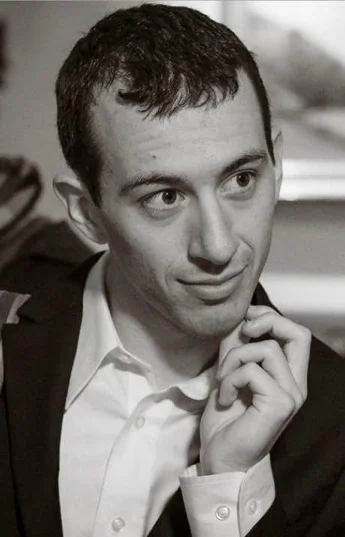
Preben Antonsen (b. 1991) graduated from Yale University in 2013, majoring in music and computer science. He has been composing since he was a small child, and studied composition with John Adams from 2001-2009. The San Francisco Symphony Youth Orchestra premiered his first orchestral work in March 2009. NPR’s program “From the Top” featured Preben as a young composer in 2008. Sarah Cahill commissioned him to write a piano work for her anti-war project, “A Sweeter Music,” which she performed in Berkeley and New York. He is a 2005 BMI Student Composer Award winner, and ASCAP recognized six of his compositions with Morton Gould Young Composer Awards in 2001, 2002, 2005, 2006, 2009 and 2010. He collaborated with other teenage composers and instrumentalists on the Bay Area new music concert series, “Formerly Known as Classical,” which seeks to engage teenage audiences.

Preben transcribed John Adams’ Second String Quartet for two pianos as Roll Over Beethoven, performed by Christina and Michelle Naughton in March 2016. The new music ensemble After Everything has premiered two of his works, Instruments of Straw for string orchestra and A Basil Tale for soprano and ten players.

Pianist Wuu connects with deep feelings in Rachmaninoff's 'Rhapsody'
Elliot Wuu, piano

Elliot Wuu, piano

Elliot Wuu, piano soloist for the Symphony Parnassus June 11 concert, loves the deep feelings evoked by Rachmaninoff, the great Russian Romantic composer who also happens to be his favorite.

“I feel like I can connect with the strong emotions. I adore his heart-wrenching harmonies,” Elliot says.

Elliot, 17, lives in Fremont, Calif., and attends Valley Christian High School in San Jose. He studies piano with Yoshikazu Nagai at the San Francisco Conservatory of Music Pre-College Division, and when not practicing, he likes to play with gadgets and technology, and also loves to swim and play basketball. He has been studying piano since age 6.

His love of music began early: His parents told him that as a baby, he frequently slept next to the piano bench while his sister Rebecca practiced; she is now preparing to graduate with a piano degree from the Peabody Institute at Johns Hopkins University.

And as for Elliot, all those naps next to the piano bench, plus many years of practice have paid off.   

Elliot Wuu, piano

Elliot Wuu, piano

He is excited to play Rachmaninoff’s Rhapsody on a Theme of Paganini at the upcoming concert. “I am ecstatic to perform with Symphony Parnassus,” he said. “I hope I will be able to share my love of music with the audience, and to inspire them too!”

“I really like Rachmaninoff's creativity throughout this piece,” Elliot says. “He uses numerous ways to vary the Paganini motive to compose unique textures and expressions in each variation.”

The Rhapsody—one of Rachmaninoff’s most popular pieces—is actually a set of 24 variations on the 24th and last of composer Paganini's Caprices for solo violin. In 2015, Elliot performed it to win the Hilton Head International Piano Competition. That achievement is one of many national and international prizes he has won in his young career, including:  

  • 2017 National YoungArts Foundation Finalist Winner
  • 2017 U.S. Presidential Scholar in the Arts candidate
  • 2014 Lang Lang International Music Foundation Young Scholar (2014-2016)
  • 2016-2021 Music Teachers Association of California Young Artist Guild, the highest honor bestowed to California music students
  • Two-time first prize winner of the Pacific Musical Society Competition, whose past winners include violinist Yehudi Menuhin and pianist Leon Fleisher
Painter's use of light and color inspires composer Cwik's 'Luz Dorada'
Calzado 3 paintings.png

Q&A with Stefan Cwik, Symphony Parnassus composer-in-residence

Stefan Cwik, composer-in-residence

Stefan Cwik, composer-in-residence

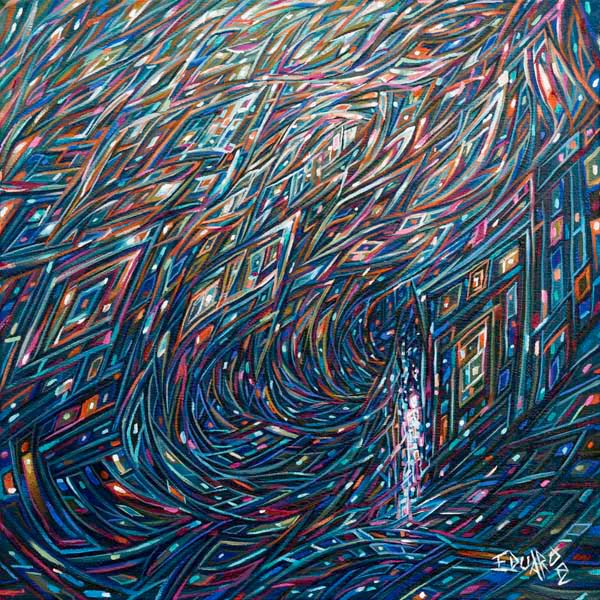
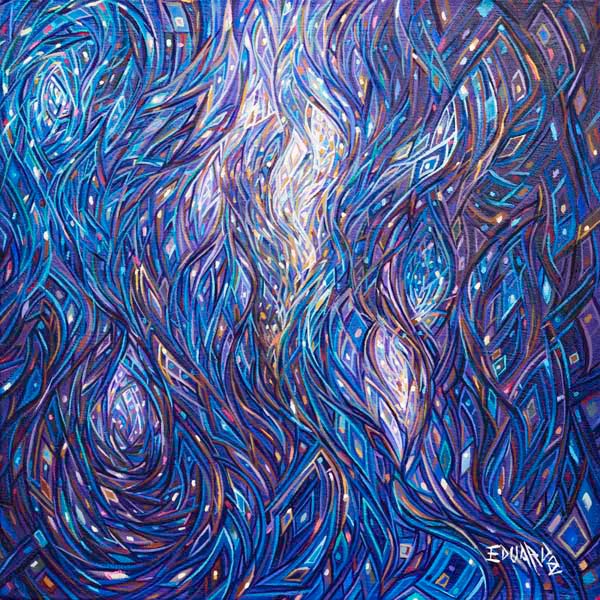
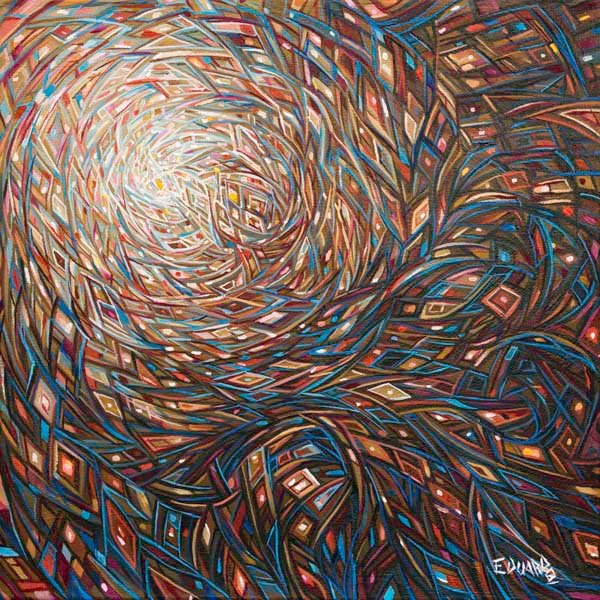
Stefan Cwik, Symphony Parnassus composer-in-residence, is proud to present his latest work, Luz Dorada: Music After Three Paintings by Eduardo Rodriguez Calzado in a world premiere with Symphony Parnassus.

Stefan, 30, who was named composer-in-residence in 2016, has collaborated three times before with Symphony Parnassus, premiering his Concert Dances for Orchestra, Piano Concerto, and his English horn concerto, The Sword in the Stone.

He is professor of music theory and musicianship at the San Francisco Conservatory, from which he also has a bachelor’s degree in composition. He also has a master’s in composition from The Juilliard School, where he won the orchestral composition competition twice, with his works Terpsichore and The Illusionist. 

Originally from Chicago, he now resides in the Bay Area.

How did you become acquainted with Eduardo, the artist who inspired your music? What is it about his paintings that drew you in?

Finding Eduardo's paintings was a happy accident. I was browsing through abstract art on my computer. I hadn't intended to come across a living artist since I was looking through older art from the late 1800s and early 1900s. A picture of one of Eduardo's artworks made its way into my search. That led me to his website where I learned about him as an artist and as was able to explore some of his works. I was immediately drawn in by the extraordinary use of fragmentation of forms and sensitivity to color and light. Upon reading his artistic statement, I immediately connected with him as an artist, specifically this line (taken directly from his website) "In most of my paintings I represent the human form or some sort of human element and our connection to another plane of consciousness."

Was it unusual to find inspiration in paintings? Have you done this before?

I had never before used visual art as an inspiration for a piece of music. I have always loved art museums and the process of experiencing and receiving a visual work of art but had not directly used art for my music.

Which composers inspire you and why?

I tend to listen to Igor Stravinsky, Britten, Ravel, Esa Pekka Salonen, and Thomas Adès. I like them all for different reasons, but I would have to say that what links them together is their ability to draw from the music that came before them for inspiration and innovate with an enormous creative sensibility that allows them to compose in an instantly recognizable style.

How has it been to work with Symphony Parnassus this time around?

It has been great working with Symphony Parnassus. The orchestra has been picking up the music rather quickly. The music seems to sit well with all of the instruments, which has been good to experience because it shows a general improvement in my orchestral writing. It is a very playable piece.

The challenges are always the same. Generally they are specific things such as bowing and phrasing for the strings, which is something that I consider a weak point in my orchestration skills. Although it is happening much less this time around, in the past it always takes a little bit of time to communicate the affect of the music to the players if the notated music does not communicate that obviously.

Steve helps an awful lot with this because he is such a sensitive musician that he can look at the score and understand what the underlying musical intention is. It is really an honor to work with him every time I get the chance.